Haslemere Signal Box History

The heritage reasons for the preservation of Haslemere Signal Box after it has left operational use by Network Rail have been well described.

This introduces the history of the line and the part that the Signal Box has played in that story.

The Portsmouth Direct Line as it became known was intended by the London and South Western Railway to be a shorter and quicker route from London to Portsmouth as opposed to the existing routes via Eastleigh or Brighton. It was rigorously opposed by other railways but managed to open fully in 1859, albeit as a single-track line between Godalming and Havant.

There were only a few trains every day and safe signalling presented little of a problem, railway policemen regulating traffic on a time interval system. The first signal box at Haslemere opened in1865. It can now be assumed that some form of Block operation was now in use. There was a second box from 1876 to 1899.
Doubling of the track occurred between 1875 and 1877.

By this time Haslemere was on its second signal box and had probably introduced Absolute Block Signalling in which no train could enter a block (or section) until the preceding train had left.

The length of blocks was dictated by the distances to signals and points controlled by that box. Signals were operated by wires and points by metal rods. Thus, the physical strength of a signal man dictated the distance that these could be from the signal box. Control of trains was facilitated by semaphore signals operated by the signalman who communicated with adjacent boxes via telegraphy.

This took two forms: block instruments which indicated the status of the track – occupied or unoccupied and a system of bell codes conveying operating information and train descriptions. It should be realised that this was in the era before practical telephones existed.

A further signal box, the present one, opened in 1899 and in use until 2025.

Since its building, there have been many developments both to the line itself and in the practice of signalling, but not its principles.

In the former category, the electrification of the line took place in the 1930s on a third rail direct current system.

In signalling, there have been advances such as motorised points, colour light signals and computerised information systems.

However, the essence of the Absolute Block System remains.

Forming a good basis of understanding safe and reliable signalling which has been in existence for more than 150 years.

Haslemere Railway Station

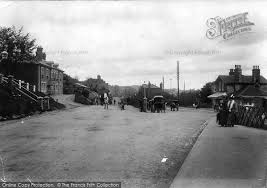
In 1859, the railway came to Haslemere with the construction of a station on the Portsmouth Direct Line.

Before this it had been possible to reach Portsmouth by rail via Eastleigh and Fareham, crossing Portsmouth Harbour by ferry. An alternative route, more circuitous, went via Brighton. The Direct Line ran via Guildford through Petersfield to Havant where it joined the Brighton line, and then Portsmouth.

The railway was to have an enormous influence on Haslemere and its growth in the following years. For example, Haslemere’s population in 1859 was 400. Now, there are some 17000 people in the town, an increase more than 30 times. This compares with a national ratio of about 2.5 times and 3 times in London in the period.

There were two important reasons for growth.

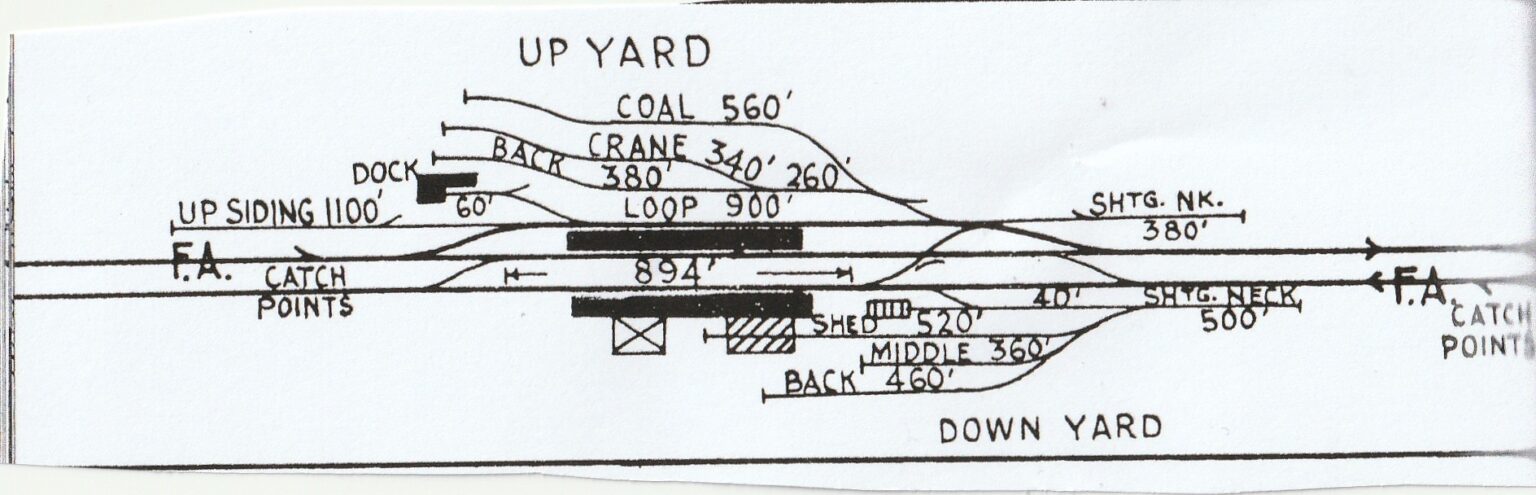
The first was that the railway transported goods to Haslemere for a growing population. These included coal for domestic fires, as well as providing the fuel for the Haslemere gas works. But the goods yards on each side of the line also brought food into Haslemere.

This included a livestock dock to unload live animals for the Haslemere butchers. Further, the traffic was not one way as there were market gardens in Haslemere which sent produce via the railway. The other reason for population growth was that the railway permitted easy access to London making it practical for people to work there while living in Haslemere.

This accounts for the significant growth of Haslemere compared with nearby towns such as Petworth and Midhurst.

But just as the railway provided potential for expansion it too needed to grow to meet increasing demand.

When the railway opened in 1859, it had a single line which was adequate for two or three trains a day in each direction. The line was doubled in 1878, allowing many more trains to run with a matching signalling system. The present signal box opened in 1895.

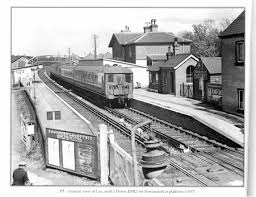
1937 saw the electrification of the line using 750 volts direct current supplied via a third rail. At the same time the current three platforms were constructed, making Haslemere the only such station between Guildford and Havant.

In 2016 the two-level car park was built.

Some features have disappeared.

Both goods yards have long gone, replaced with a light industrial park and a car park. However, there is every reason to believe that Haslemere station will continue to play its part in servicing a thriving Haslemere.