Museum Highlights

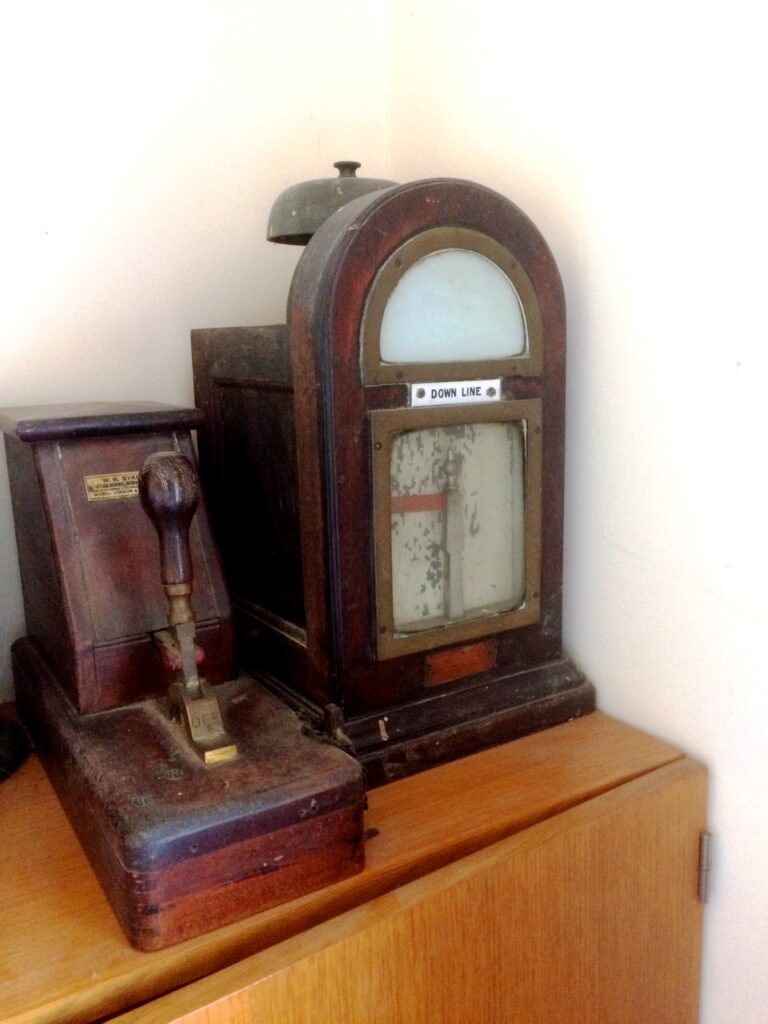
1840s block signalling system:

The block system of signalling was introduced in the 1840s so that only one train could occupy a section of track (a ‘block’) at any one time.

The indicators which showed signal positions and whether a train was in the block were connected by telegraph wires to adjacent signal boxes in either direction.

The principle of the system is still in use today, although much improved, and is still the basis of many modern, high-speed railways. This example was used in Bagshot, Surrey, and was generously donated by Steve Sharp.
1920s steam train poster:

1925 was the year that the ‘King Arthur’ class of express passenger locomotives was introduced to the Southern Railway. They were fast, powerful, and reliable, and did sterling work on many main line duties including London – Portsmouth and the West Country. Frequently seen at Haslemere.

Fire buckets:

Trains full of coal, with intense heat in the engine, sparks flying from the chimney and gas lighting in the coaches which had wooden construction were a huge fire risk. Every Signal Box and station had fire buckets containing water or sand which were religiously maintained and saved many lives and railway property. Generously donated by Carmen Ashton-Jones.

Midhurst station layout in TT gauge:

We have a delightful model of the old Midhurst LSWR station, built in TT finescale. It accurately represents the station and goods yard before closure to passenger traffic in 1925. Built by Melvin Lovell, but awaiting restoration to working order, it was donated to our museum by the Mitchell family.

Haslemere station sign:

The Haslemere station sign is the ‘target’ or ‘bullseye’ type adopted by the London and South Western Railway in the 1920s. Allegedly inspired by the popular London Underground signs, they remained in use until the 1960s.

This example was one of several mounted on lamp posts on the station platforms. It was kindly donated by South Western Railway station staff.

Get in touch

If you’re looking to visit the museum, we’d love to hear from you.